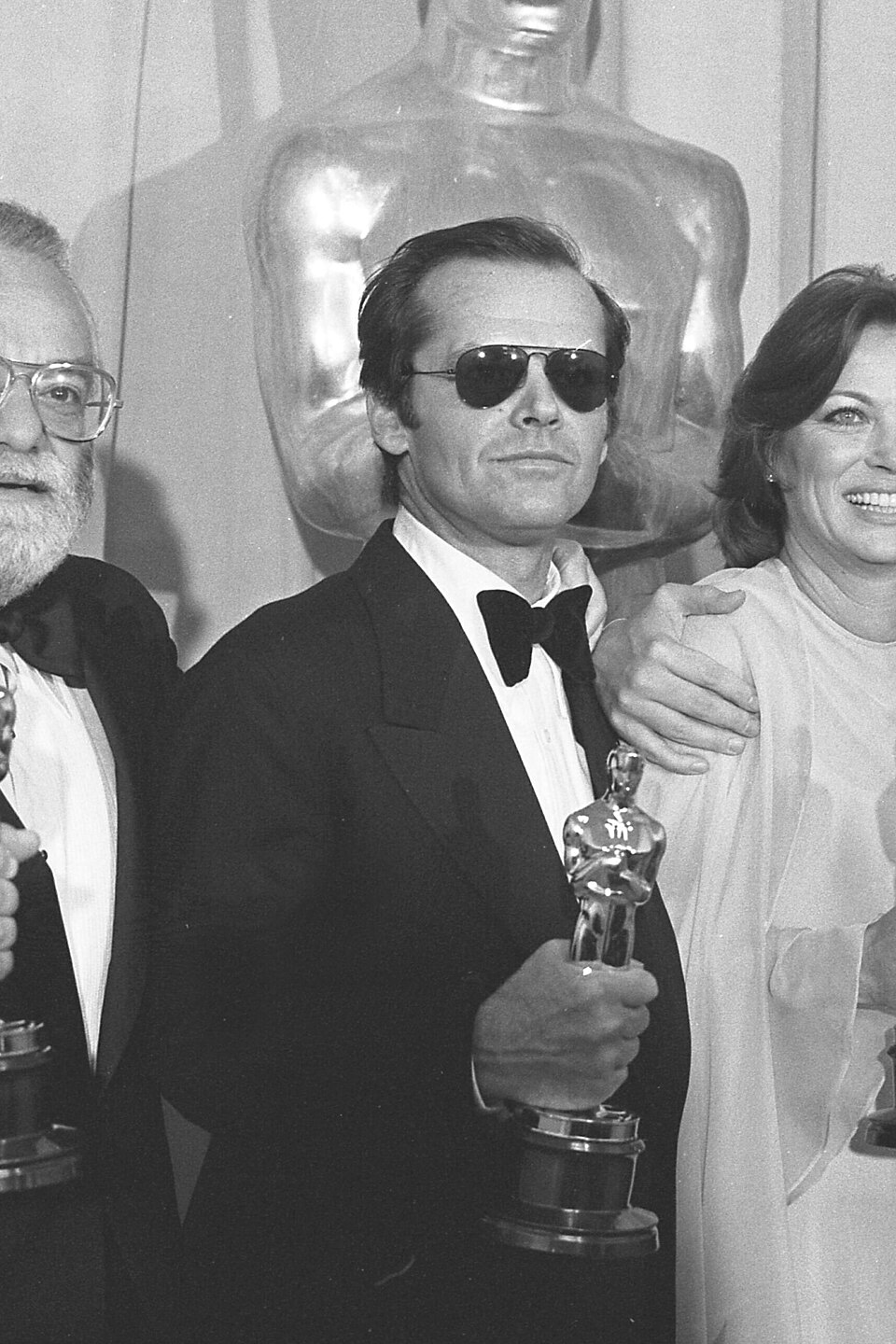
Jack, 1974
Time’s fact-checkers told Jack Nicholson his sister was his mother, while Chinatown played its twist in theaters.
Chinatown turns on the most famous twist in American film: Faye Dunaway, struck from sentence to sentence, confessing that her sister is her daughter. Audiences in 1974 left theaters repeating the line to each other.
Hold that in one hand.
That same year, with the film still playing, researchers from Time magazine doing routine background work called Jack Nicholson with a question. They had found something in the records that nobody had ever told him. June, the older sister who left for Hollywood when he was a boy, was his mother. She had been a teenager. The woman he called Mom his whole life was his grandmother. The family had closed around a pregnant girl in 1937 and stayed closed for thirty-seven years.
The star of the sister-daughter film was a man whose sister was his mother, and he was the last to know.
It was not any film; it was the one whose twist is that exact sentence. It was not any actor; it was its lead. It was not a deathbed confession; it was fact-checkers, arriving sideways, in public. And both women were already gone, so the truth reached him the way it reaches Gittes: complete, too late, and witnessed.
His answer may be the most Nicholson sentence ever spoken: a pretty dramatic event, he allowed, but not what he’d call traumatizing. He thanked the two women for protecting him the only way their time allowed, and went back to work.
Chinatown was still in theaters.