

It burned. It didn’t.
Welles’ 1938 comedy was written off in a fire until a print surfaced in an Italian warehouse.
In the summer of 1938 Orson Welles was twenty-three and already the most talked-about director on the American stage, which he found insufficient. The Mercury Theatre was mounting Too Much Johnson, William Gillette’s 1894 farce, and Welles’ idea was to open each act with film: the theatre would breathe out, a screen would take over, and an audience that had bought tickets to a play would be handed a chase.
They shot for about ten days, silent, because the stage would do the talking. Joseph Cotten, in his first leading role on film, hung off Manhattan rooftops in a straw boater; a Yonkers quarry stood in for Cuba; the finale went into the river. Welles cut and recut the footage in a hotel suite and never finished.
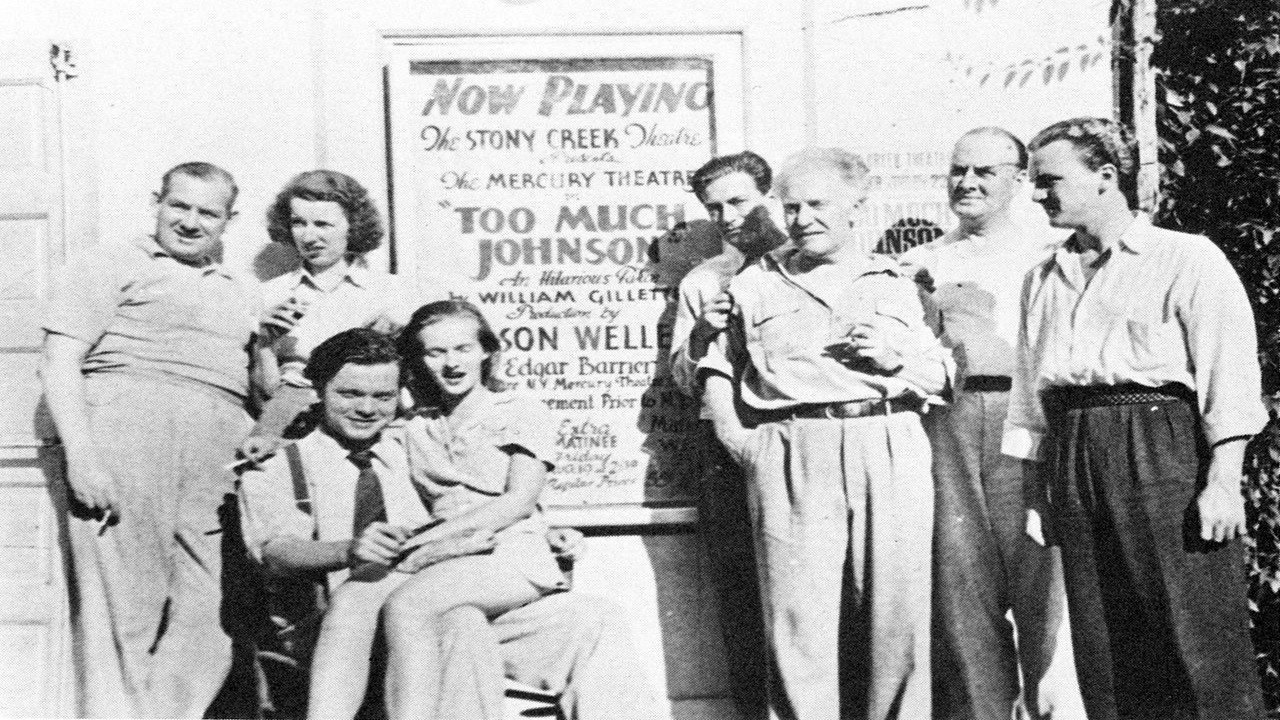
At Stony Creek, Connecticut, that August, the play went up without its film. The cut was unfinished, the theatre could not properly project it, and Paramount, it turned out, held the film rights to the play. The farce sagged exactly where the footage should have carried it, closed after its tryout, and never reached Broadway. The cans went into storage, and then into the dark.
What burned was the certainty.
In August 1970 a fire took Welles’ villa in Madrid, and with it, he believed, the only print. He said so more than once, with the particular authority of a man reporting his own loss. For thirty-eight years the film was a fact about a fire.
Then, in 2008, a warehouse in Pordenone, Italy turned out to have been holding a print for decades. George Eastman House restored it with the local archives, and on 9 October 2013, seventy-five years after the summer it was shot, the film premiered a short walk from the shelf that had kept it. Three years after Johnson, Welles made what the world agreed to call his first film, and the rooftop chases got their answer in Citizen Kane. The forty minutes cut from The Magnificent Ambersons are still out there, or nowhere.